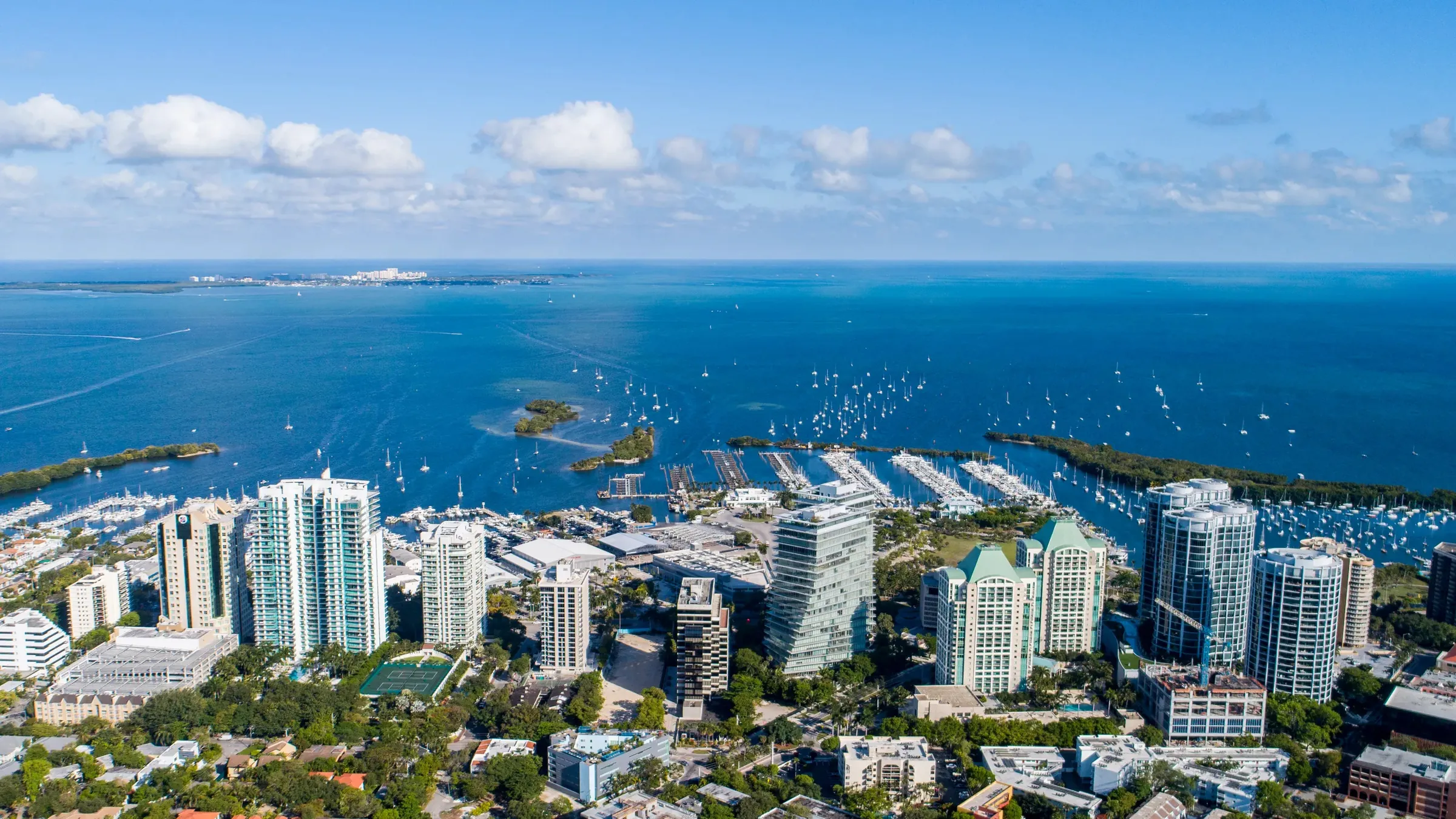
September and October are the two months of the year when Bay Harbor Islands is at its emptiest, its warmest and its cheapest. They are also the two months people email us about most nervously. Both of those things are true at once, and the honest version is more useful than the brochure version.
What the weather is actually doing
Hot and humid. Highs in the upper eighties, lows that barely drop, and humidity that is genuinely a factor if you are not used to it. The ocean is at its warmest of the year. Swimming in it in September is closer to a bath than to a swim.
It rains most days, and this is the part people misunderstand. A Miami wet-season afternoon storm is intense, loud, and over in forty minutes. It is not a gray day. The morning is usually clear, the storm arrives somewhere between two and five, and the evening is often the most beautiful part of the day. Planning around it is easy: do the beach in the morning, do something indoors at three.
What the actual risk is
Hurricane season runs from June to November, and September is statistically its peak. That is a real thing and we are not going to tell you otherwise.
What it means in practice, for a one- or two-week trip: the probability that a named storm affects your specific dates is low, and the probability that one makes a direct hit on Miami-Dade during your specific week is lower still. Most September trips here involve no storm at all, and a lot of rain that arrives politely at three in the afternoon.
What it also means: if a storm does come, you will have several days of warning. Tropical systems are tracked for a week before they arrive. Nobody is surprised by a hurricane in Miami in 2026: the forecast cone is on every phone in the city days ahead.
How to book so a storm does not cost you
This is the part that actually matters.
Buy travel insurance, and buy it early. Once a storm is named, it becomes a “known event” and most policies will no longer cover cancellations related to it. Buying at the time of booking rather than at the last minute is the entire trick.
Check the cancellation policy properly, not the icon. Ask specifically what happens in the event of a mandatory evacuation order or an airport closure. We will tell you in writing.
Book somewhere that will talk to you. This is one of the genuine advantages of booking direct: if a storm is tracking toward us four days before your arrival, you are having that conversation with our team, not opening a support ticket.
Fly into a flexible fare. Airlines routinely issue travel waivers ahead of named storms, but only if your ticket is with them and only if you act on it.
What you get in return
The beach at Haulover on a Tuesday in late September has perhaps a dozen people on it. Restaurants that need a booking three weeks ahead in February will seat you on the night. Bal Harbour Shops is quiet enough to walk through properly. Rates are at their lowest point of the entire year, often less than half the February number for the same residence.
And it is still Miami: eighty-eight degrees, warm water, and a sunset over Biscayne Bay that does not know what month it is.
Who this window suits
Couples and solo travelers with flexible dates and travel insurance. Remote workers who want a month somewhere warm and cheap and do not care that it rains at three. Anyone who has been in February, loved the place and hated the crowd.
Who it does not suit: a once-in-a-decade family trip with fixed dates, no insurance and no tolerance for a changed plan. Come in March.
Booking next winter from this September
The other thing worth knowing: September and October are when next winter’s high season gets booked. If you are here on a quiet-season trip and you like the place, that is the moment to take the week you want for December through March, before the returning guests take it. Ask while you are still in the apartment.
Unit 405 faces the bay and the Miami skyline and handles a long stay well; Unit 803 is the larger residence with ocean views from the eighth floor. For quiet-season rates and flexible-date inquiries, write to us.